
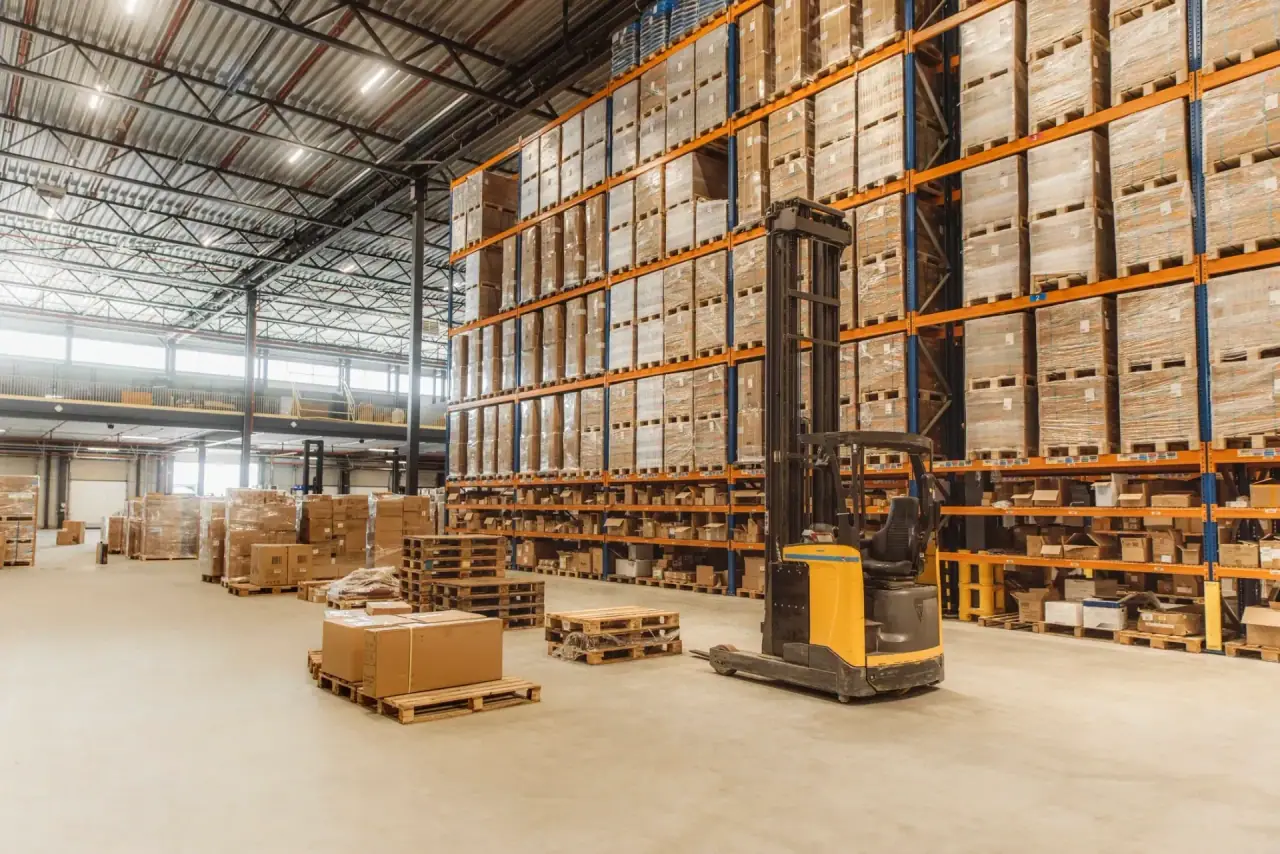
In a warehouse, the floor is the working surface. Pallet trucks, forklifts, pickers and staff all cross it throughout the day. When cleaning slips, small problems can build quietly: a spill left unattended, debris collecting around a dock, or stock and waste narrowing a route.
The result can be more than an untidy site. It can mean avoidable injury risks, disruption to vehicle movements and a working environment that is harder to manage.
Here are four operational risks a neglected warehouse floor can create, and how daily cleaning helps control them. The HSE’s warehousing guidance highlights workplace transport and manual handling among the key health and safety risks in the sector. Cleaning supports your controls. It does not replace your site’s risk assessments, maintenance or traffic management.
Risk 1: Slips and trips on the warehouse floor
Stretch wrap, pallet banding, spilled liquids and loose packaging can all create hazards underfoot. Dust films on smooth concrete may also affect grip, while rainwater around entrances and loading areas can leave surfaces wet.
A hazard that is not dealt with promptly can catch out a picker walking a route, a driver stepping from a vehicle or an operator moving a load. It can also interrupt work while the area is isolated and made safe.
A defined warehouse floor cleaning programme helps by setting sweeping or vacuuming frequencies for busy lanes and agreeing who responds when a spill is reported. The response should be clear: make the area safe, clean the contamination using the agreed method, and leave the surface dry before it is returned to use.
Dust control matters on smooth floors, too. The right method for the surface and type of debris helps avoid simply moving dust from one area to another. Daily checks and simple records make it easier to see whether a spill was dealt with and whether a problem area keeps recurring.
The HSE’s free Warehousing and storage: Keep it safe guide offers practical guidance on reducing risks in warehousing. A reliable cleaning routine supports that work by making housekeeping a regular operational control, rather than something left until the end of a busy week.
Risk 2: Dock and loading bay hazards
Loading bays connect warehouse activity with incoming and outgoing vehicles. Debris around dock levellers, packaging waste at the indoor-outdoor threshold and wet surfaces after rain can all affect the area. Dirt can also make bay edges and markings harder to see.
This is a busy interface where vehicles, trailers and pedestrians may be working close together. Cleaning needs to be planned with that activity in mind.
Schedule loading bay cleaning for an agreed period when no trailer is docked and the area is available for safe access. Clear packaging waste on a defined rota, so it does not build up between weekly tidy-ups. Keep accessible bay edges and markings clean enough to remain visible, and report damaged surfaces or other defects to the site contact.
Cleaning supports a safe loading area, but it does not replace vehicle marshalling or traffic management. Those remain the operator’s responsibility. Cleaners should follow the site’s access arrangements and should not enter an active vehicle area without the agreed controls.
Risk 3: Blocked walkways and obscured floor markings
Pedestrian routes can become narrowed by pallets, banding and waste. At the same time, dirt can obscure painted walkways, crossing lines and hazard markings. If people cannot see the markings, they are less likely to follow the intended route.
Separating pedestrians from vehicles is a core workplace transport control. The HSE’s guidance on creating a safe workplace explains the importance of separate pedestrian routes, clear markings and routes kept free from obstructions.
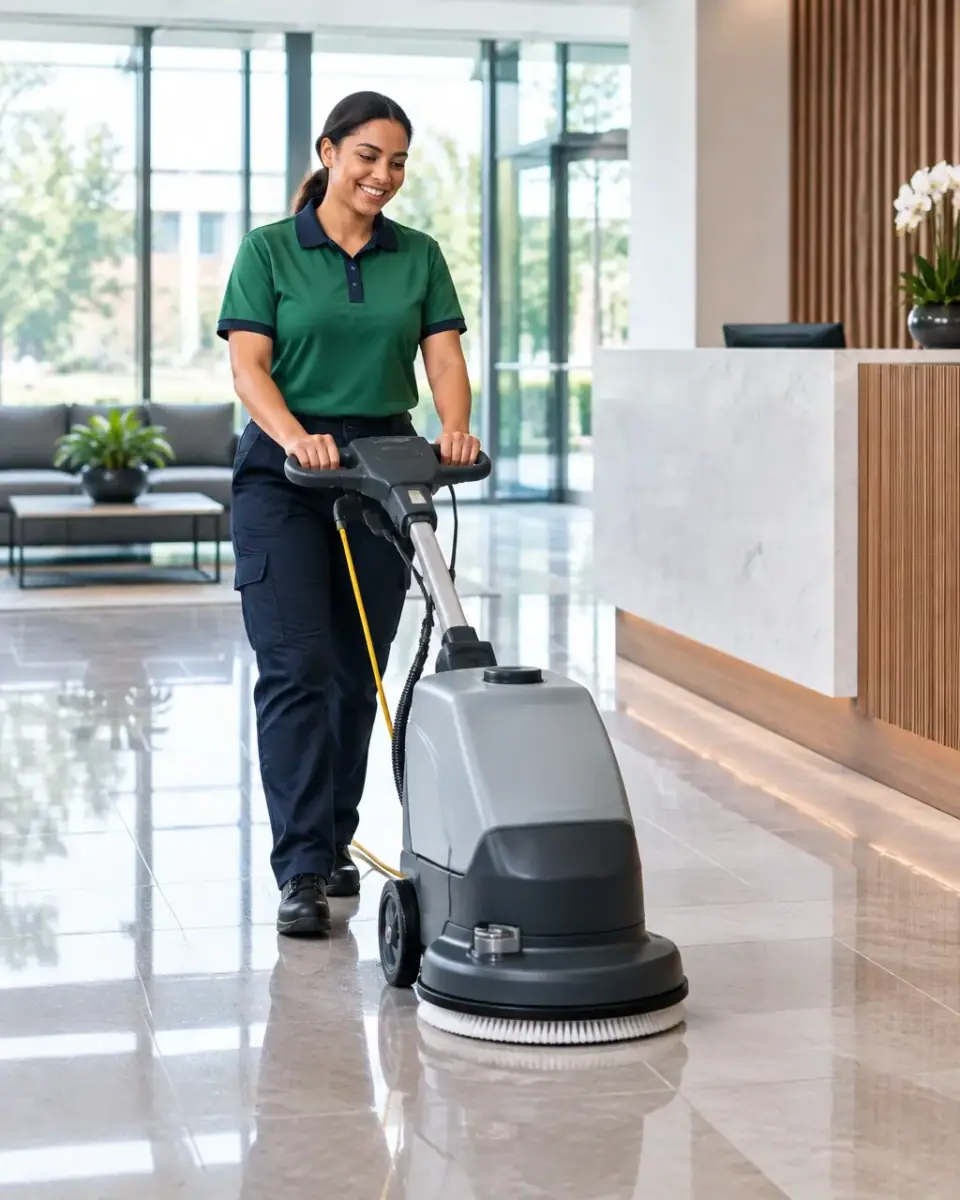
Regular sweeping and suitable scrubbing help maintain visible floor markings. Machine hard-floor cleaning can support this on large concrete areas where the surface and access arrangements are suitable. Cleaning staff should report pallets, stock or other obstructions rather than moving items without authorisation. Your site team remains responsible for keeping routes clear and managing traffic.
Risk 4: Welfare areas and staff facilities
Warehouse floors and loading areas often receive attention first. Canteens, breakrooms, toilets and locker areas can then be overlooked, despite being used throughout the working day.
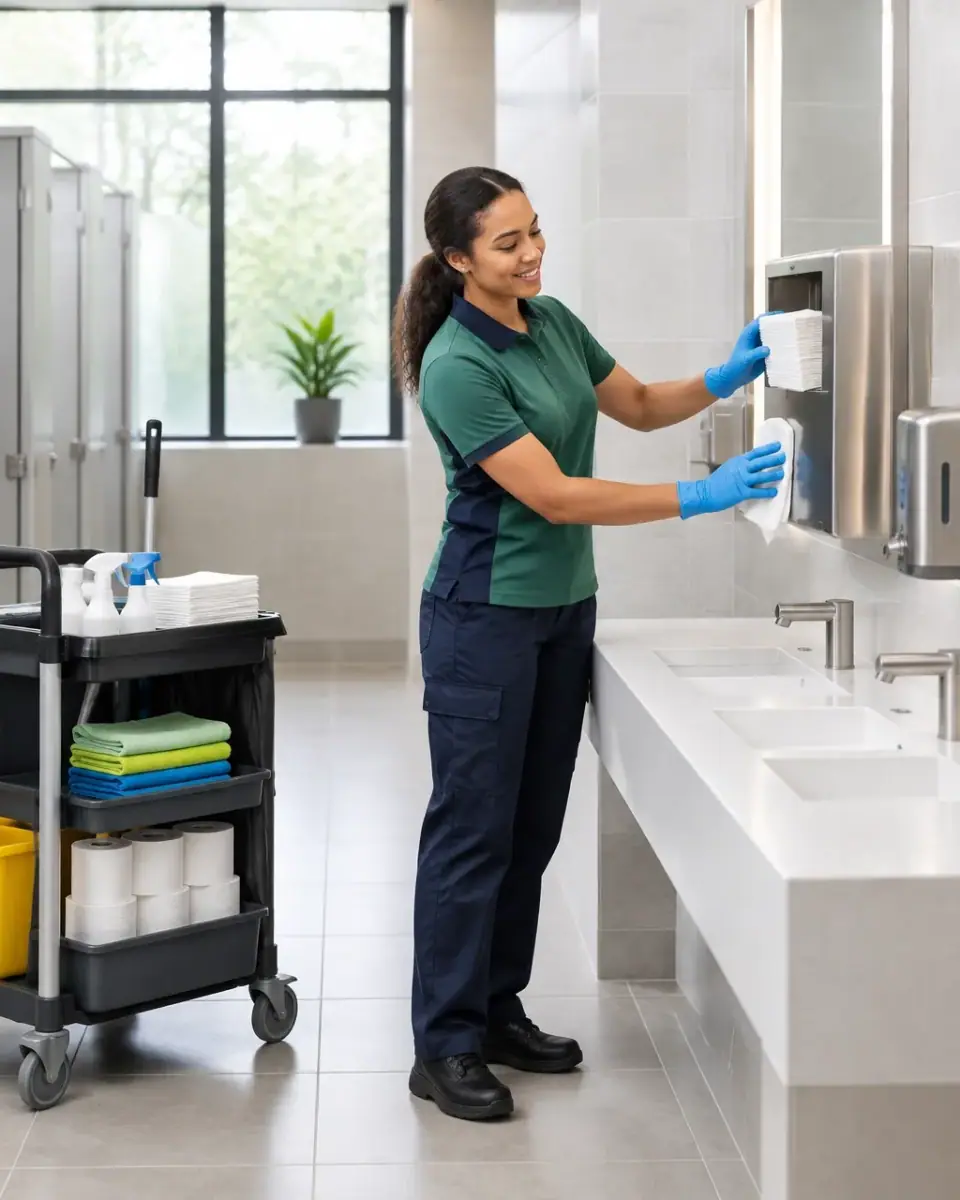
For teams doing physical work, clean and orderly facilities are an important part of a suitable workplace. Cleaning these areas daily, and restocking agreed washroom consumables, helps prevent basic tasks from being left to whoever happens to notice a shortage first.
Build welfare cleaning and replenishment into the cleaning programme. Set clear responsibilities for the agreed areas and supplies, so staff know what is covered and managers have a consistent point of contact if something needs attention.
What a structured warehouse cleaning programme looks like
A cleaning programme should match your premises, access arrangements and operating requirements. CQD has published a full room-by-room and zone-based warehouse cleaning programme. This article focuses on the operational risks the programme is designed to help control.
CQD plans cleaning around site activity, including overnight or between-shift work. Cleaning is available 7 days a week, 24 hours a day. Each premises has the same dedicated two-person team, with cover teams available when a regular cleaner is absent. Cleaners are directly employed, DBS-checked, reference-verified and uniformed.
You also have dedicated account management and a response within 2 hours. It starts with a free, no-obligation site survey and a tailored cleaning plan. Mobilisation is within days, with daily cleaning typically starting within 5–7 working days of the agreed plan.
Choose the cleaning level that fits your site
CQD’s monthly cleaning subscriptions support different levels of warehouse cleaning, from daily essentials to more regular machine floor care. Each includes an initial deep clean with every new subscription. All prices below are starting prices, excluding VAT. The final fixed monthly price is confirmed after a free, no-obligation site survey.
| Package | Starting price | What it includes |
|---|---|---|
| Bronze | £880 per month ex VAT | Essential daily cleaning: vacuuming, mopping, bin emptying and replacement; surface and desk wipe-downs, washroom cleaning and restocking. |
| Silver | £1,280 per month ex VAT | Everything in Bronze; machine hard-floor cleaning; deep kitchen and breakroom cleaning; daily touch-point sanitisation; named supervisor oversight |
| Gold | £1,680 per month ex VAT | Everything in Silver; daily machine hard-floor cleaning; washroom consumables fulfilment; regular inspection and sign-off; cover teams for staff absence |
All prices exclude VAT. Machine hard-floor cleaning is included in Silver, while Gold makes it daily, subject to the agreed plan and safe access. This can be relevant for large concrete floors where regular machine care supports cleanliness and the visibility of floor lines.
Subscriptions are monthly, with 30 days’ notice to end the monthly fixed monthly plan. The final price and cleaning scope are confirmed after the site survey.
Commercial cleaning experience, backed by recognised standards
CQD Cleaning Services provides commercial cleaning only. Established in 2012, the company has served more than 500 businesses and brings over 14 years’ experience. CQD is ISO 9001, ISO 14001 and ISO 45001 certified, a BICSc member, CHAS accredited and fully insured. Cleaning products are eco-friendly and COSHH-compliant.
CQD serves 33 locations across the South East and Home Counties: six primary locations (Slough, Maidenhead, Reading, High Wycombe, Windsor and Bracknell) and 27 other locations. See all locations, commercial cleaning in Slough or the full range of commercial cleaning services.
Warehouse floor safety FAQs
How often should a warehouse floor be cleaned?
Set cleaning frequency according to traffic, debris, floor type and the work taking place in each area. Busy routes and areas prone to spills need a defined routine and a clear response for new hazards. Review the programme when site activity or conditions change.
Can cleaning happen around live operations and vehicle movements?
Yes. Cleaning can be scheduled around operations, including overnight or between shifts. The work area and access must be agreed with the site team. Cleaning should not disrupt vehicle movements or take place in an active vehicle area without the site’s controls.
What is included in a warehouse cleaning subscription?
Bronze covers essential daily cleaning, including floor care, bin emptying and replacement; surface and desk wipe-downs, and washroom cleaning and restocking. Silver adds machine hard-floor cleaning, deep kitchen and breakroom cleaning, and daily touch-point sanitisation. Gold adds daily machine floor cleaning and washroom consumables fulfilment. An initial deep clean is included with every new subscription.
How quickly can cleaning start on our site?
After a free, no-obligation site survey and agreement on the tailored plan, daily cleaning typically starts within 5–7 working days. Mobilisation is planned within days.
Request a free warehouse cleaning survey
A clear cleaning plan can help you manage floor, loading bay and welfare-area risks without adding avoidable disruption to warehouse operations.
Request a free, no-obligation site survey to discuss your premises, cleaning requirements and monthly subscription options.
